
Columbus Resident Lookup Records
A Columbus resident lookup rarely works as a one-name search. It works as a comparison across custodians. The Franklin County Auditor ties a name to a parcel, a tax year, or an ownership record inside Columbus. The Treasurer does the same. The Recorder connects a person or company to a recorded instrument on a Columbus parcel. Courts and Probate add case associations. The voter tool and vital-record channels answer narrower questions still. So start wherever your known fact fits best. Then test the match against a second Columbus record before trusting it.
| Record | What It Can Confirm | Columbus Custodian | Access Route |
|---|---|---|---|
| Parcel and tax record | Columbus ownership or tax relationship, site and parcel identity | Franklin County Auditor or Treasurer | Free name, address, or parcel search |
| Recorded instrument | Columbus named party, instrument type, date, and legal trail | Franklin County Recorder | Quick or advanced official search |
| Court docket | Columbus indexed case association, filing date, and case number | Clerk CIO or Municipal Court Clerk | Online index, then official file |
| Probate and vital record | Columbus marriage, estate, guardianship, name-change, birth, or death event | Probate, Columbus Public Health, or state archive | Index or custodian copy channel |
| Voter record | Columbus registration details the official tool is permitted to show | Ohio Secretary of State | Individual name and county lookup |
Property records come first when you hold an address or a likely owner's name in Columbus. Probate fits better when the useful detail is a family tie, a marriage, an estate, or a name change. Treat any court or voter result as corroboration, never as a substitute for checking a second Columbus record.
Columbus Resident Name Variants
Names vary, so expect near misses. The Columbus Auditor's owner form takes LastName FirstName. It allows partial entries and supports an asterisk wildcard. Its instructions also say to drop apostrophes. Any name carrying punctuation deserves a retry without it. Before calling an owner hit the right person, capture the Columbus parcel number, site address, tax district, and any conveyance detail. Keep in mind a tax mailing line is a contact field, not proof anyone lives there now.
The Columbus Recorder offers its own check. Quick Search accepts a grantor, grantee, address, document number, or another indexed term. The advanced form narrows by party and recorded dates. It also covers document type, book, volume, page, or legal description. One quirk matters here. Index-only searching weighs each word separately. The OCR option treats a multiword phrase as a true phrase inside document text. That single difference can swing a Columbus result set widely.
| Parcel or Recorder Field | Why It Matters |
|---|---|
| Parcel number | Joins Columbus Auditor, Treasurer, and map records for one property. |
| Legal description | Helps carry a Columbus search across older Columbus documents or changing street forms. |
| Instrument number or book/page | Points a Columbus search to the specific recorded filing rather than a broad name hit. |
| Recorded date and parties | Separates Columbus transactions involving people with the same name. |
Note: An exact Columbus name match stays a lead, not an identification, until a date, parcel, relationship, or document identifier agrees too.
Columbus Resident Court Dockets
A Columbus person search can start with the Franklin County Municipal Court Case Records page. That portal takes several entry points. You can query by case number, ticket number, or company name. A last and first name works too. Optional fields let you narrow things down. You can add a middle name, date of birth, party type, case type, case year, or status. Be careful with the status field. A closed case is not always a fully finished one. Before matching a docket against other Columbus records, copy the details exactly as shown. That means the court, case number, case type, filing date, and the party role.
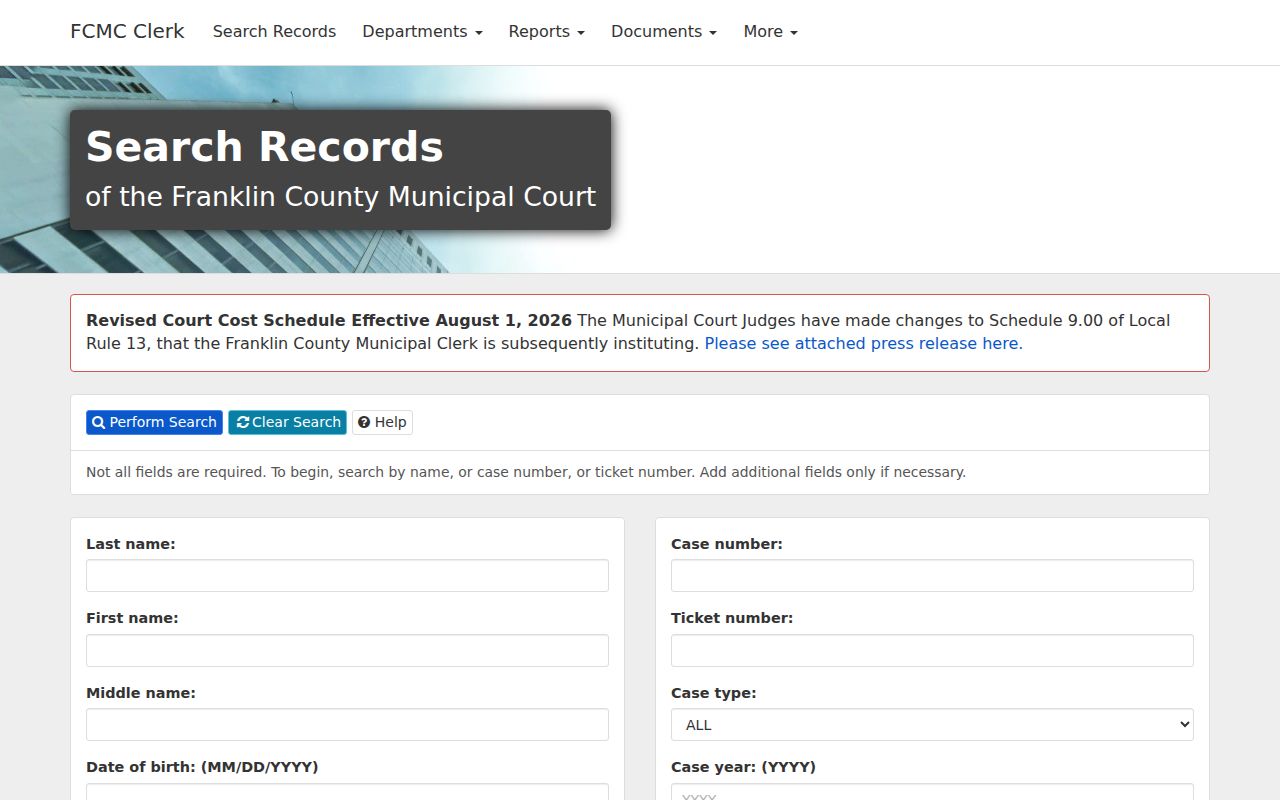
A narrow query beats a broad name sweep here. The Municipal Court search above runs on its own system. Other Columbus courts use Clerk Case Information Online, known as CIO. Common Pleas, Domestic Relations, and the Tenth District all sit on that platform. CIO accepts a last name, first name, and middle initial. It also takes court, case year, type, sequence, date range, and party or attorney fields. Treat its online docket as a convenience copy. The court file itself remains the authority.
A docket is a dated list of case events kept by the Columbus court. It proves a filing was indexed. It does not prove that everyone sharing a surname is the same person. Nor does it prove an old address still holds.
Columbus Resident Probate Leads
Franklin County Probate helps with family history. That branch of a Columbus resident lookup often matters more than a current address. The court keeps marriage records from 1803 forward. Estate, guardianship, and name-change records start at 1898. Its General Case Search wants a last, first, and middle-initial name. You can narrow results by case open date, case number, suffix, type, subtype, attorney, fiduciary, or parent-name. Each field works as a filter. Some case types stay confidential. The index route for this Columbus records image is online. It is the Franklin County Probate General Case Search.
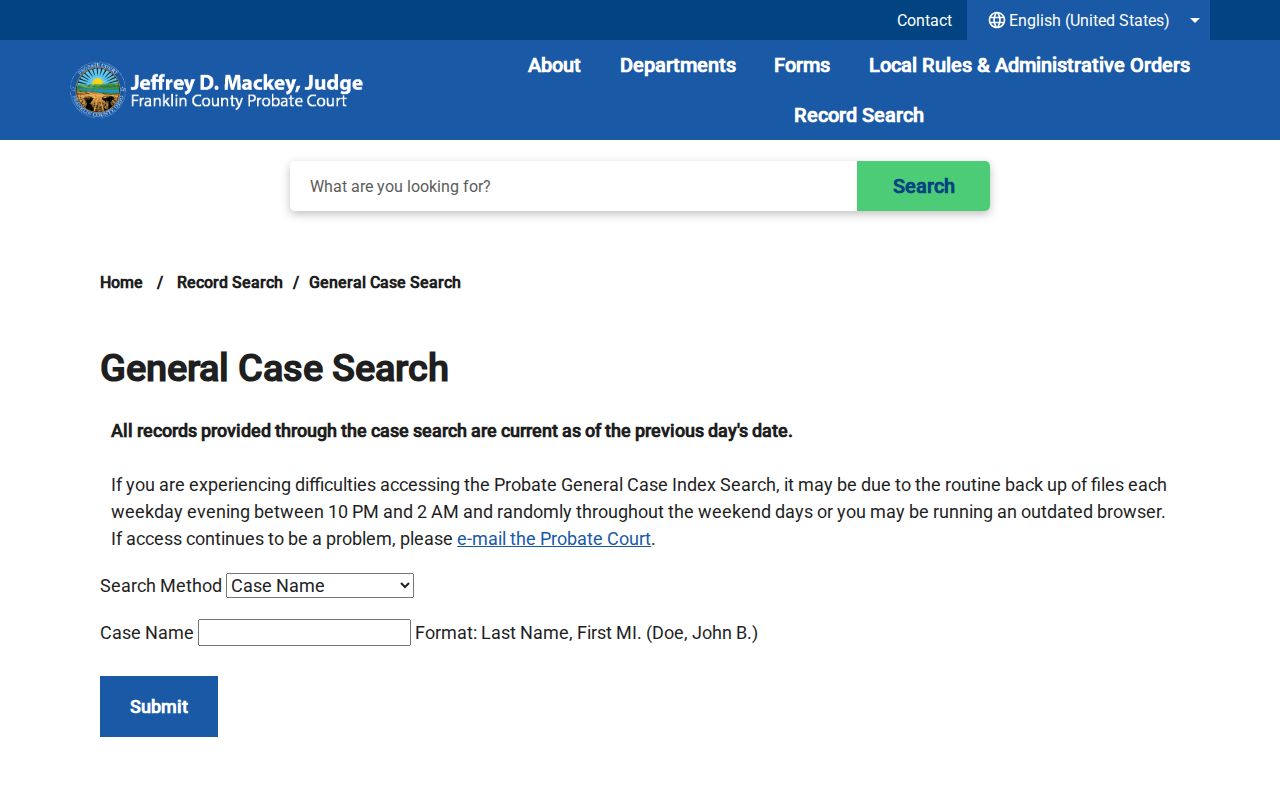
Marriage licenses tell a split story in Franklin County. The online county marriage-license index for Columbus records covers 3 January 1994 to the present, while the court's own holdings stretch back to 1803. Older licenses need a different request path. A certified marriage abstract is separate as well. Fees come from Columbus Probate: paper copies run ten cents per page, certified copies one dollar per page, and a certified marriage abstract two dollars, always subject to the court's current instructions.
Verify a Columbus Resident Match
Every Columbus resident lookup works better with a fixed sequence instead of guessing. Pick the record nearest to the name or address you hold. Then pull a second record that adds a detail the first one cannot supply. A solid match might pair a parcel with its legal description. It might also pair a court number with a filing date. A Probate relationship tied to a date can do the same work. Skip the shortcuts. A mailing line proves nothing about where someone actually lives in Columbus. Neither does a lone Columbus court address or an entity filing.
- Search the Columbus Auditor by the name in LastName FirstName form, including a punctuation-free or wildcard variation when needed. Preserve the parcel number and site address.
- Use the Columbus Treasurer by parcel, street address, or name to compare the tax year, owner identity, and legal-description or Recorder reference.
- Search the Columbus Recorder for the person, a limited date range, or the legal description. Open the resulting instrument and compare the parties and recording date.
- Use Columbus CIO or Probate only after recording the court, case number, date, or relationship that makes the result distinguishable. Obtain a custodian copy when a verified document is necessary.
- Index
- A finding aid that points to a record. It may list a name or date without supplying the full source document.
- Image
- A scan of the underlying Columbus filing. Read the parties, date, and legal description because an index can be abbreviated.
- Certified copy
- A copy issued by the office that holds the record and authenticated under that office’s procedure.
Columbus Resident Voter Boundaries
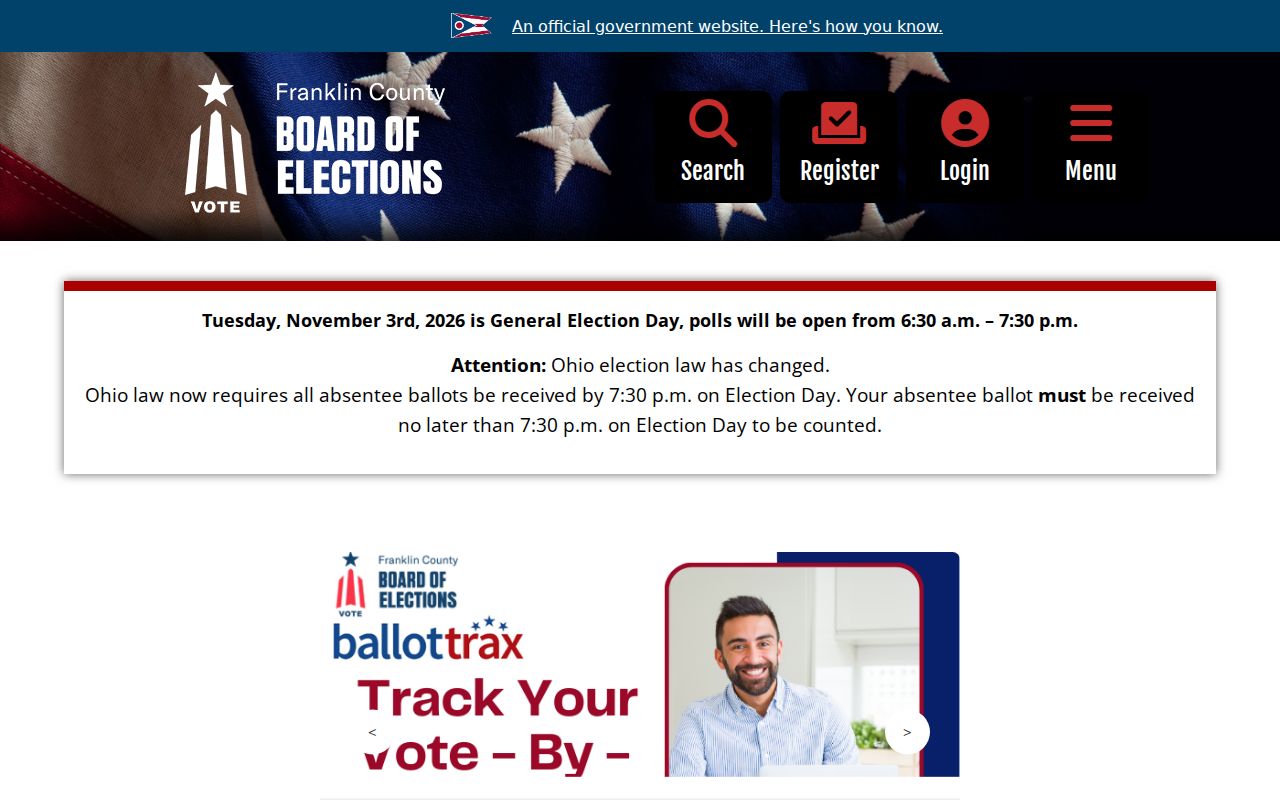
For a one-person Columbus check, the Ohio voter lookup is the right tool. It takes a first name, a last name, and a county. Where the law allows, the result can show registration and precinct details. It does not reveal ballot choices. It also is not a neighborhood list. Franklin County's separate ElectionLink screen asks for a birth year and house number. It adds an anti-bot step. That step discourages bulk collection. The Franklin County Board of Elections site displays the county's official election records path. Any Columbus resident lookup can follow it.
A vital record proves an event happened at a recorded place and date. It is not a modern profile of a person. Columbus Public Health issues Ohio birth certificates from 1908 forward and eligible death certificates within its stated coverage. Older Columbus vital material and marriage records sit with Franklin County Probate. Under ORC 3705.23, Ohio treats certificates as public records. Adoption material and similar protected content face special restrictions.
Columbus Resident Credential Checks
Credential and entity records add a date-checked layer to a Columbus resident lookup. Neither one is a residents directory. eLicense Ohio searches individual and business records by first name, last name, license number, or board. A detail page can list name, status, board, credential type and number, issue or expiration date, and city or state. The Ohio official attorney directory displays much the same shape of information. Its business contact does not establish a home address or a current personal location.
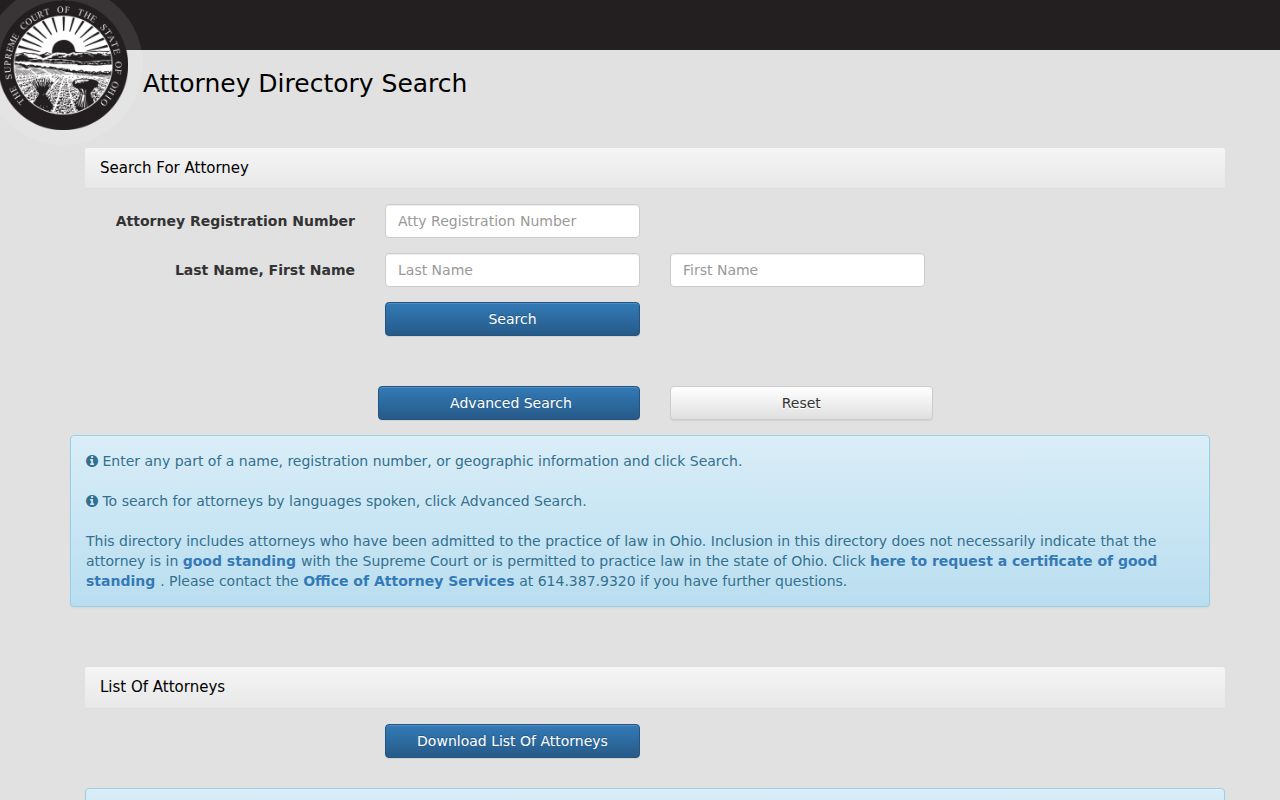
Separate a person from a similarly named entity using an identifier, a filing date, and a status. A professional or business record is no substitute for a parcel, court, Probate, voter, or vital record held by the proper Columbus custodian.
Columbus Lookup Request Fallback
When an official Columbus screen stops short, ask the office for an existing, identified record. Ohio's Public Records Act, ORC 149.43, generally calls for prompt inspection during regular business hours. It also calls for copies within a reasonable period. No fixed day count applies. A Columbus requester usually does not need to give a name or purpose. An office may ask. But it must first explain that the answer is optional and might help locate or deliver the record.
For Columbus Building and Zoning records, a focused request can name the certified address. It can also name the parcel number, permit number, and record type. The City's current form estimates up to ten business days for routine work. Larger requests may take up to thirty. At the Columbus Clerk or Probate counter, ask for a specific case, date, or instrument. Do not request a custom report about a person.
Note: A Columbus denial or redaction should state its legal basis and release separable nonexempt material when the law requires it.
Columbus Resident Lookup Privacy Limits
Some Columbus records will not surface anywhere. Absence from an online result never proves no record exists. Ohio Safe at Home gives qualified survivors a designated address and keeps program identity and address information confidential. A protected Columbus address stays confidential. Sealed or expunged court material, adoption records, protected voter information, motor-vehicle personal information, and protected Recorder material all sit outside a general Columbus search. Ohio's targeted redaction process can shield specified exposed identifiers without deleting the underlying record.
Use every result for a lawful personal purpose. Confirm it with the office that keeps it. If a record might belong to someone with the same name, pause until a document identifier, date, relationship, or property detail settles the question.
Lawful personal research. Columbus resident lookup results are not invitations to contact, track, stalk, harass, or intimidate anyone. Ohio law prohibits menacing by stalking and specified telecommunications harassment.