
Finding Columbus Resident Records
Jurisdiction comes first. Columbus spans more than one county. The City corporate-boundary data pulls from Franklin, Fairfield, and Delaware County parcel layers. A Columbus mailing address is therefore not automatically a Franklin County parcel. Confirm the Columbus city and county before anything else. For the typical Columbus Franklin County address, the Columbus-area Auditor links a street address or owner name to a parcel. The Recorder links parties to recorded land documents. The Columbus library keeps dated household listings. A Columbus court or election result offers a separate check. Its date and scope must fit the question.
Match the record to the fact you need. A Columbus property card supports an ownership or tax connection. A Recorder document supports a recorded transaction. A Columbus city directory shows an occupant in one printed year. None is a complete roster for an address. A shared name still demands a second confirming detail before it becomes part of a residents directory trail.
- Verify the Columbus address and county, then use the Franklin County Auditor’s address or owner route for the parcel and tax identity.
- Check the Columbus Recorder route for a grantor, grantee, document number, date, or legal description tied to that parcel.
- Use the Ohio voter lookup only to confirm an individual Columbus record, not to assemble a Columbus street list.
- For an older household, locate the relevant Columbus city-directory or reverse-directory edition at Columbus Metropolitan Library.
- When a Columbus online result stops short, ask the custodian for the existing nonexempt record or arrange a Columbus inspection under Ohio’s Public Records Act.
Columbus Records Custodians
Franklin County splits its key Columbus resident records across separate offices. The Columbus Recorder holds recorded instruments. The Columbus Auditor maintains parcel and owner inventory. The Columbus Board of Elections runs local election services. Their Columbus portals are fine starting points, but a counter visit, phone call, mail request, or focused public-records request still matters when a Columbus result is missing, older, or restricted. For a street-wide Columbus address chain, the Columbus street directory lays out the fuller parcel workflow.
Franklin County Recorder
373 S. High St., 18th Floor
Columbus, OH 43215
614-525-3930
Note: Columbus court, probate, vital-record, and City permit custodians use separate systems, so an empty Columbus result at one office does not end the search.
Columbus Parcel Search Fields
The Columbus Auditor's search form has rules that prevent false misses. Its owner route wants LastName FirstName, and it accepts partial names. It also supports an asterisk wildcard. The address route separates street number, direction, street name, and unit. Leave the suffix, such as Road or Avenue, out of the street-name field. Drop apostrophes from surnames like O'Neil too. Narrow any broad result before treating a parcel card as a residents directory lead.
| Auditor control | Columbus use |
|---|---|
| Columbus owner | Enter last name first; partial text and * are supported. |
| Columbus street number and direction | Combine with a no-suffix Columbus street name to narrow an address. |
| Columbus Street Name Only | Use no suffix; *High and S *High are documented patterns. |
| Columbus parcel ID | Use all or part without dashes, with wildcard support when needed. |
See the Columbus Auditor address-search screen before entering a Columbus address. 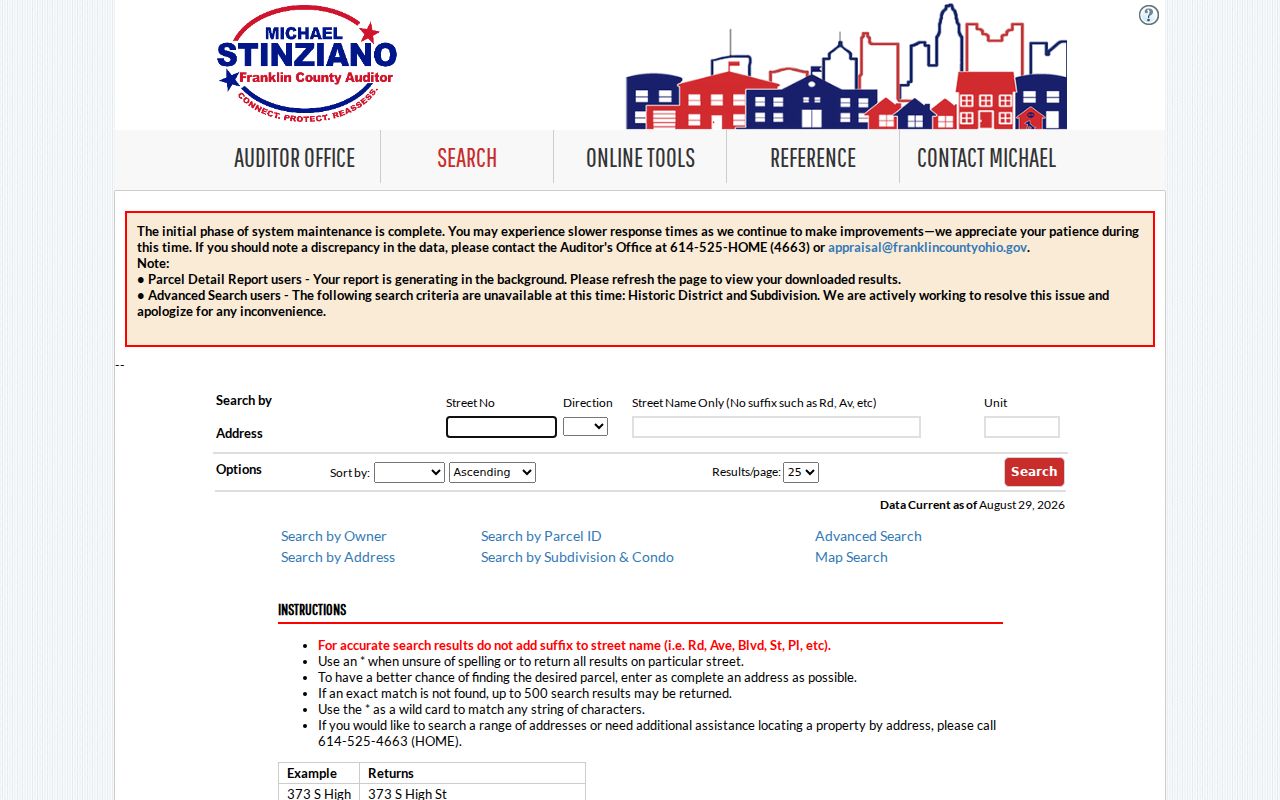 The separate Columbus fields explain why a full mailing-style address can fail when a simplified street search succeeds.
Columbus Address and County Lines
Columbus address work has a geographic twist. The City's corporate-boundary GIS service is built from Franklin, Fairfield, and Delaware County parcel layers, which makes it a good way to orient an address. The City states plainly, though, that the layer is not a legal boundary record. A Columbus city name in a mailing address is not the same as a Columbus city limit. Annexation, postal naming, parcel geography, and election jurisdiction can each point to a different system.
Begin with the certified Columbus street address for City addressing or permit work. Then use the parcel ID and legal description with the Auditor, Treasurer, and Recorder. A tax mailing address can differ from the site contact address, and a USPS city or ZIP validates delivery rather than county jurisdiction. For a boundary question, consult the appropriate county Recorder instead of assuming Franklin County applies.
Columbus Recorder Name Trails
The Columbus Recorder's Cloud Search is the document side of the Columbus residents directory. The quick form accepts a grantor, grantee, subdivision, document type, or document number. Recorded-date limits are optional. It also splits Index Only from Index and Full Text OCR. A multiword indexed search treats each word separately. An OCR search treats the terms as a phrase. Advanced Search adds party-name, book, volume, page, document-type, and legal-description routes.
Read any recorded document with care. Its cover page can list an instrument number, recorded date and time, and document type. It can also list page count, first grantor and grantee, return mailing label, submitting party, and fees. Those fields do not decide a title. Open the image and compare its parties, legal description, and date. Do this before adding the document to an ownership history.
The Recorder quick search illustrates the available name and document paths. 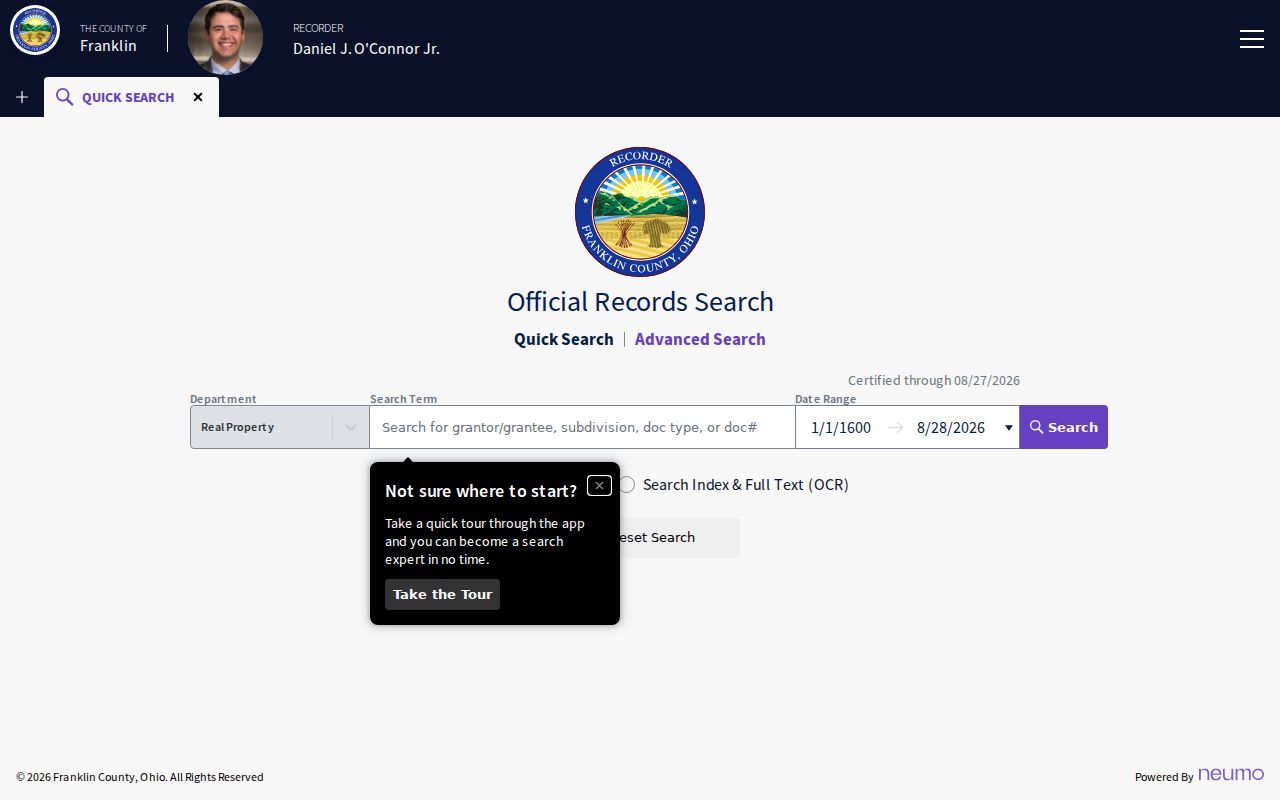 Its selectable search scope is a useful Columbus-specific difference between a name indexed by the office and a phrase that may appear only in document text.
Current Columbus Resident Sources
No single current Columbus resident list exists. Each public source covers one defined relationship to a person or address. A property or tax record identifies an owner or mailing contact. A Recorder result identifies parties to a land instrument. Voter tools verify registration within election-law limits. Court and probate indexes identify a case or filing, but their online screens never replace the official file at the records office.
| Columbus record layer | What it can confirm | Custodian | Access path |
|---|---|---|---|
| Columbus Auditor property record | Columbus parcel, owner/tax relationship, sales and values | Franklin County Auditor | Free Columbus property search and counter |
| Columbus Treasurer tax record | Columbus tax bill, payment, and parcel context | Franklin County Treasurer | Free Columbus name, street, or parcel search |
| Columbus recorded instruments | Columbus grantors, grantees, liens, deeds, plats | Franklin County Recorder | Columbus Cloud Search, archive, or counter |
| Columbus individual voter record | Columbus registration, precinct, and permitted voting context | Ohio Secretary of State | Columbus name and county lookup |
| Columbus Probate and court indexes | Columbus case, estate, marriage, or docket association | Franklin County courts | Separate Columbus portal and official-file paths |
When a Columbus name needs disciplined confirmation rather than an address trail, run a resident lookup sequence across independent records. Commercial search sites may compile material from many places at once. The official record, though, names its custodian, scope, and date, which makes it the better place to verify a claim.
Columbus Court and Probate Checks
Franklin County splits its court records by jurisdiction, and knowing the split saves time. Municipal Court matters, civil, criminal, and traffic, sit in that court's own Case Records Search. Common Pleas General Division, Domestic Relations, and Tenth District appeals run through CIO. Probate keeps a separate index for general cases and marriages.
A court hit can tie a name to a case number or filing date. That is useful, but it carries a limit. It does not prove the person named is the resident you had in mind, so treat any match as a lead rather than proof of address.
View the Franklin County CIO search for its court and name controls. 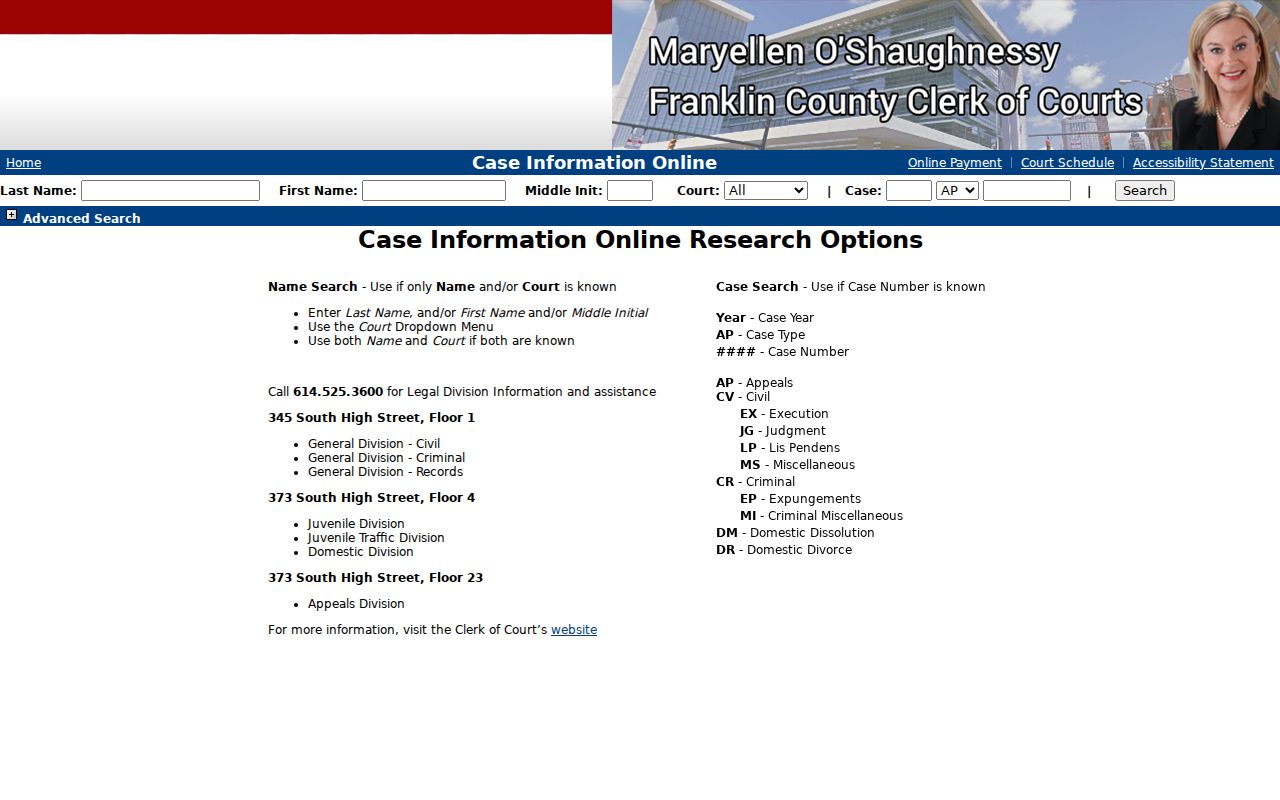 CIO labels its online information as a convenience copy, so the clerk’s official paper or electronic file controls if the record must be verified.
Franklin County Probate record search is particularly useful for an estate, marriage, guardianship, or name-change lead. 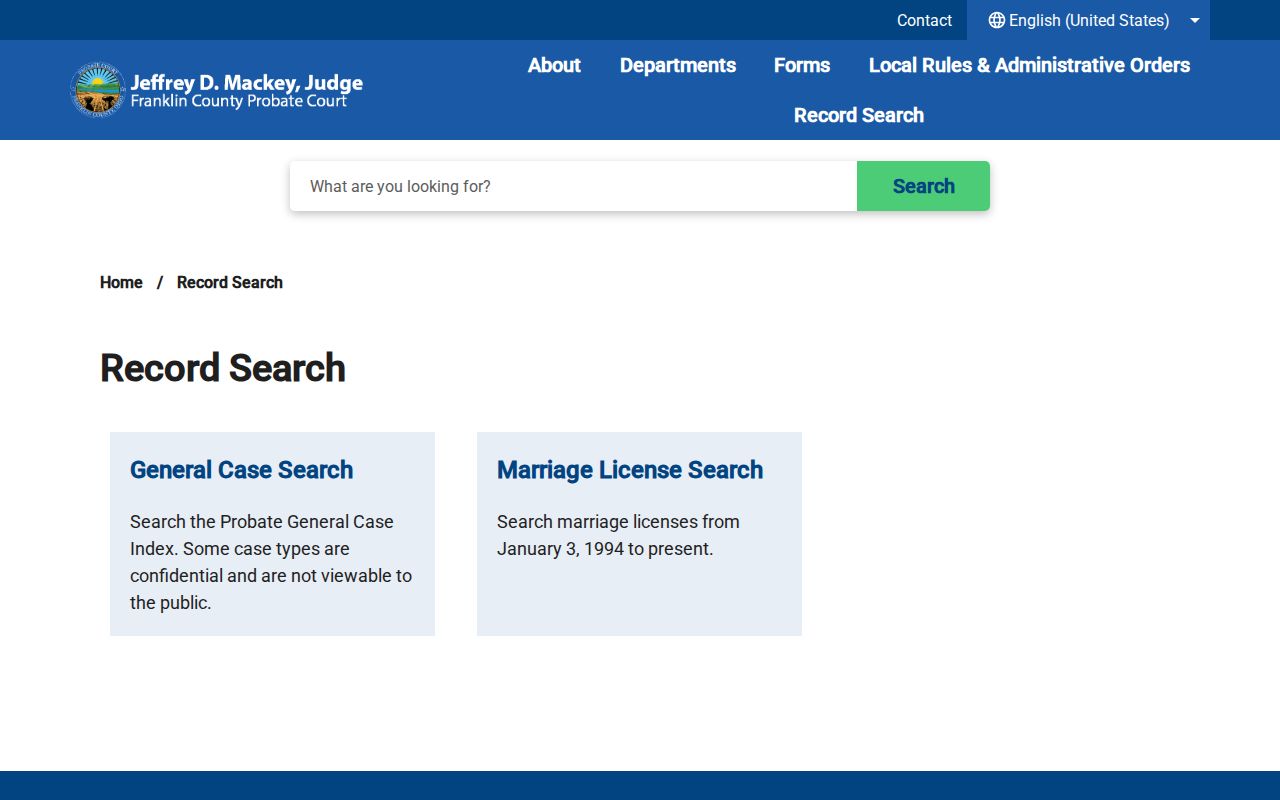 The Probate Court holds marriages from 1803 onward, estate and guardianship material from 1898 onward, and county births and deaths for 1867 through 1908, though some case types remain confidential.
Columbus Permit Address Clues
City Building and Zoning Services keeps a different kind of address record. Citizen Access searches Addressing, Building, Code Enforcement, Planning, Utilities, Zoning, and related records. No account is needed. Stick to one search key at a time. That could be a permit number, an application number, an undashed parcel number, or a street number and name.
Older files hide easily. The City advises dropping date limits when a record is more than three years old. Results display the date, record number, record type, and address. A CSV download is available.
Start at Columbus Citizen Access. 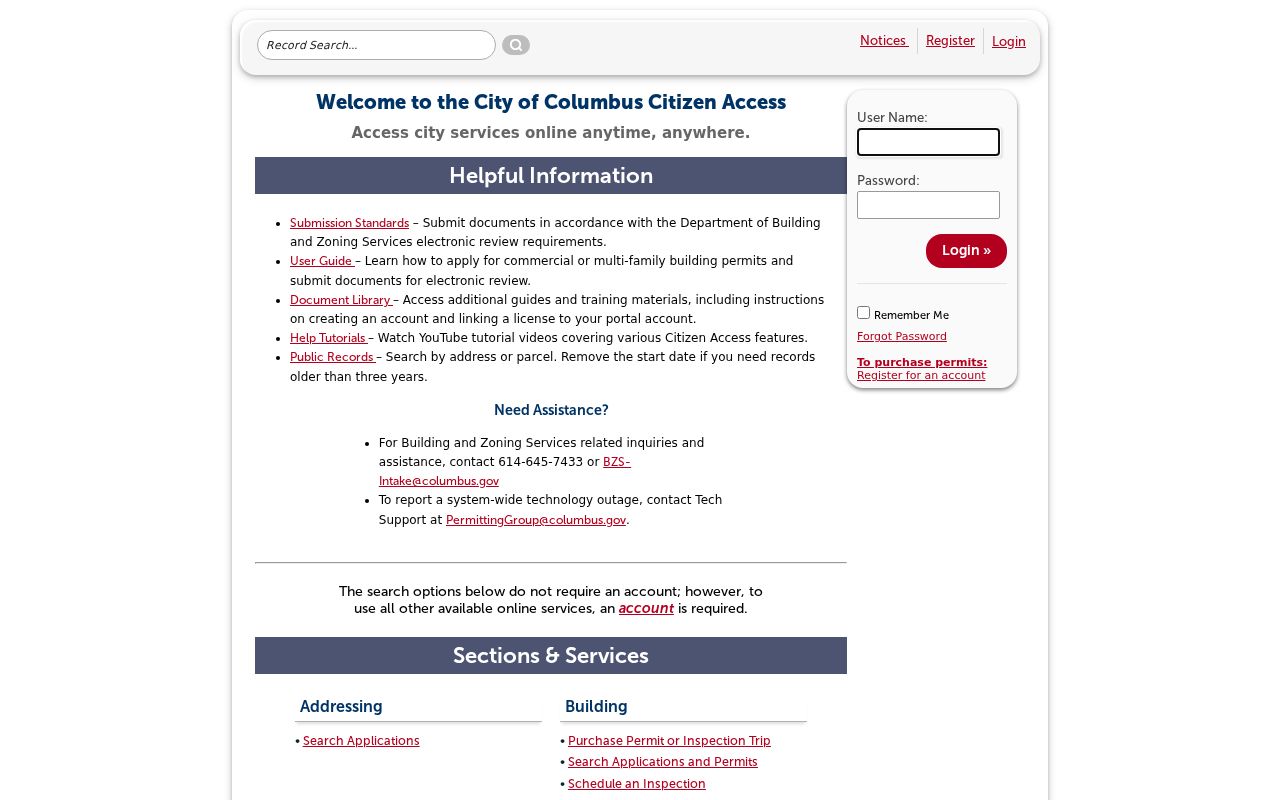 A permit sequence can help date documented work or resolve address continuity, but it is not a list of everyone who lived at the property.
Note: When a City portal record is unavailable, BZS Records Research accepts a focused address or parcel request by email or mail.
Columbus Vital Record Channels
Vital records work differently from a name-search list. Columbus Public Health issues certified birth and death certificates in person, by mail, and online. Coverage runs from Ohio births in 1908 onward. Ohio deaths run from 1971 onward. Franklin County deaths are covered from 1908 onward.
The local page lists a $25 certified-copy fee. Mail requests normally take 7 to 10 business days once the record is available. Earlier county events go through Probate. The Ohio Department of Health serves as a state ordering channel.
The Columbus Public Health certificate page lists the local methods and forms. 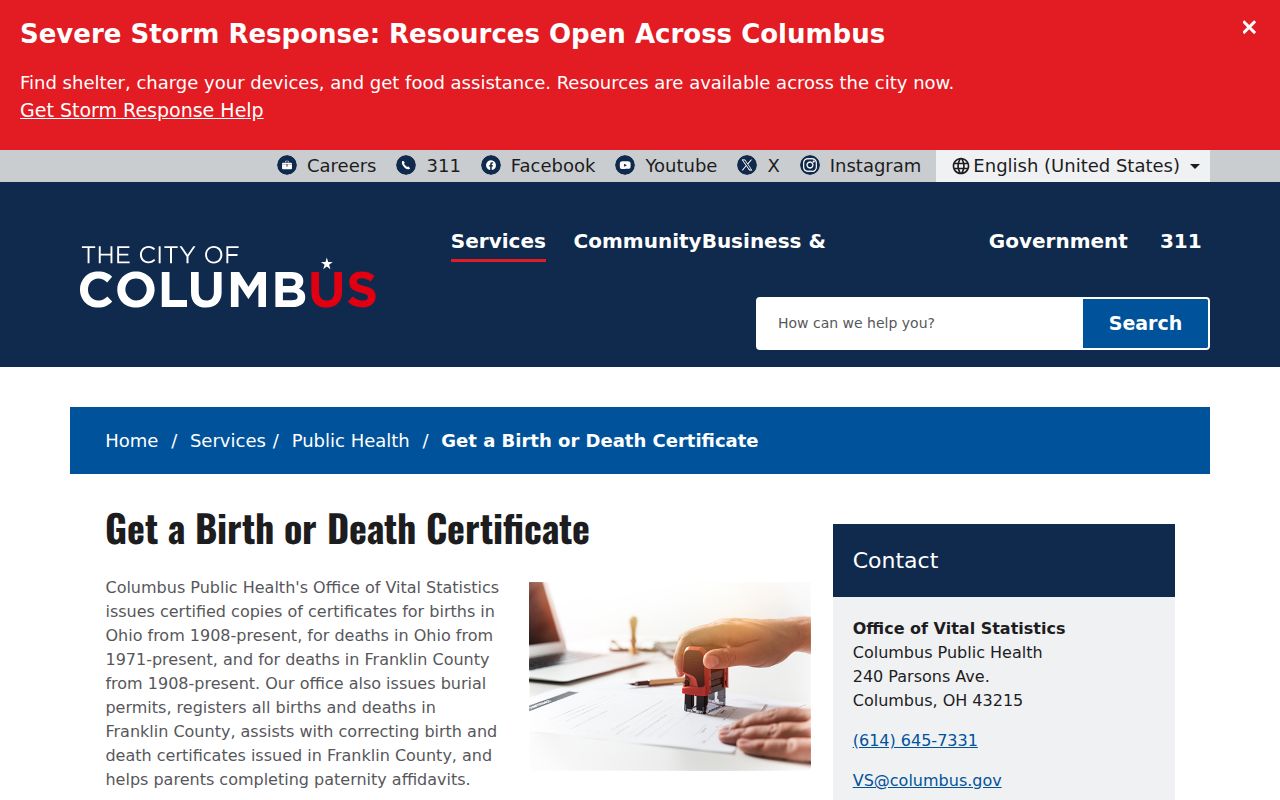 Ohio treats birth and death certificates as public records under ORC 3705.23, but adoption-related records and certain information remain protected.
Columbus Records Request Fallbacks
A search screen is not the end of the road. When a needed nonexempt record does not surface online, ask the office for the existing record. Request the record itself rather than a custom investigation. Ohio's Public Records Act, ORC 149.43, generally lets a requester inspect public records promptly during regular business hours. The same law entitles you to copies within a reasonable period. No name or purpose is ordinarily required. An office may ask for that information only after explaining that it is optional. It must also show the detail would help identify, locate, or deliver the material.
Keep any request narrow. Name the record type, the parcel or case number, and the date range. Say whether you want to inspect or get copies. A denial or redaction should cite its legal authority and release any separable nonexempt material. Columbus BZS Records Research takes focused property and permit requests by email or mail. The Clerk, Recorder, Probate Court, library, and archives each run their own counter, mail, or records-request channel. Each serves material that is not fully online.
Columbus Election Record Boundaries
Ohio's voter lookup asks for a first name, last name, and county. Franklin is selected for the usual Columbus route. It can return the limited registration, precinct, polling-place, and voting-history context that statute permits. The Franklin County ElectionLink version adds birth year and house number to the query. Those controls are deliberate. The individual lookup verifies a registration, and it is not a by-street resident list.
ORC 3503.13 opens registration records. It excludes protected identifiers, confidential voter records, and qualifying protected-worker address data. When a documented city or county voter file is genuinely needed for a lawful public-record purpose, Franklin County's Election Vault is the official bulk-file route. Safe at Home participants carry separate confidentiality protections. Those protections hold even where other record data is public.
Use limits matter. Match official records to a personal, family-history, property, civic, or safety need, and never use them to stalk, harass, or expose a protected person.
Historic Columbus Directory Evidence
The Columbus Metropolitan Library's Local History and Genealogy collection holds the main local directory shelf. Holdings reach back to 1841. The digitized City Directory Collection is working toward most holdings from the 1840s, though digitization remains incomplete. A single entry can show a dated occupant, an address, and often an occupation. The reverse, or address, section starts in 1911. That makes it the key route from an address to a listed occupant in later editions.
For collection years and reading methods, the Columbus city directory page goes deeper.
Begin with the Columbus Metropolitan Library house-history guide when an address is the starting point. 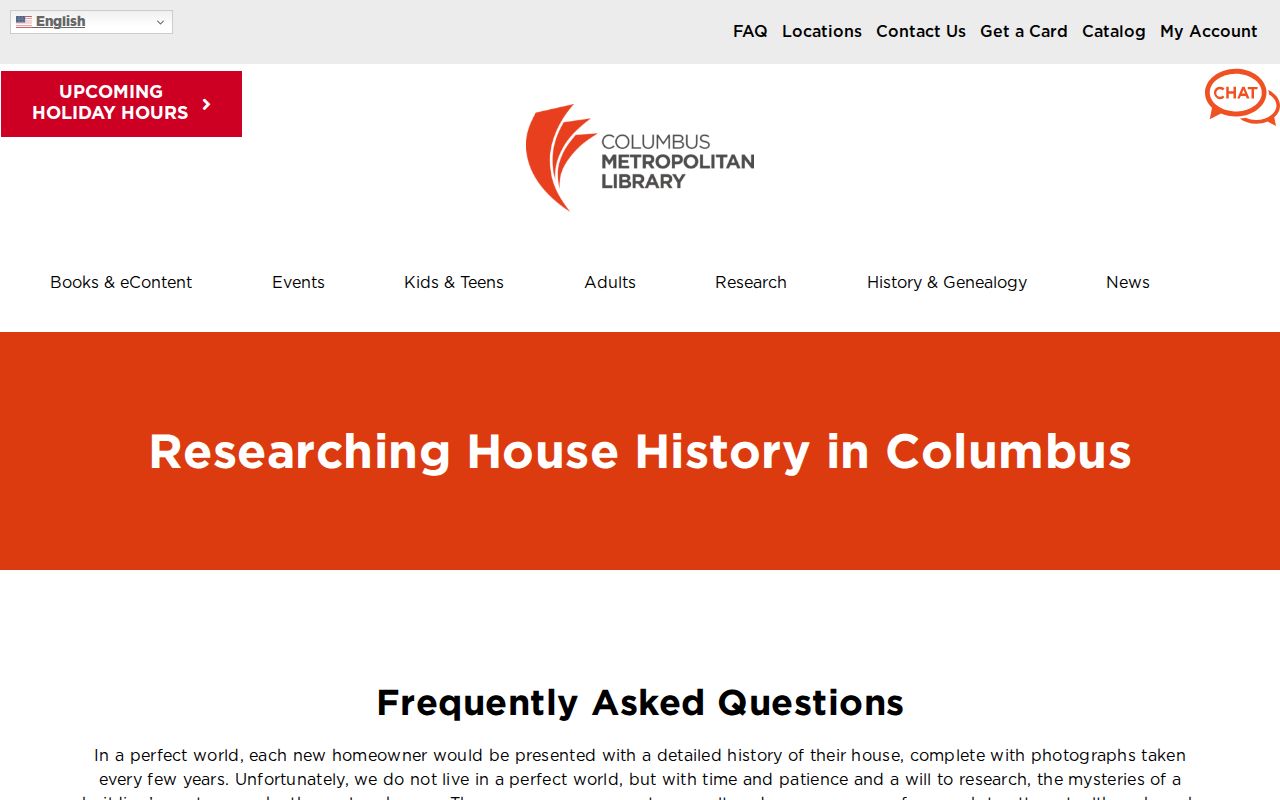 It connects directory volumes to deeds, permits, maps, and historic property research without claiming that a directory occupant owned the property.
- Parcel
- A county property unit tied to a tax and map record.
- Index
- A finding list that points to a record; it may not include every image detail.
- Criss-cross directory
- An address-based directory section used to find the listed occupant for a given edition.
- Roll
- A list maintained for a defined public purpose, such as property, registration, or taxation.
Columbus Property Filing Alerts
The Recorder's Property Alert is a free registered-user tool. It monitors a name, keyword, or record-based alert. It watches for new county real-property filings. The FAQ says the service scans daily and emails a match within 24 hours. That speed helps when a household wants to verify a document straight from the Recorder. It offers a better path than trusting an unsolicited notice. It is especially useful for catching a filing that appears after enrollment.
An alert is not a title search or a fraud finding. It is also no guarantee that every filing is detected. Open the recorded document itself and check its parties and legal description. Contact the Recorder if anything needs verification. The office has warned that third-party mailers can resemble official deed notices. They may charge for copies the Recorder will provide.
Columbus Archive Gaps and Alerts
Columbus research can cross a genuine record-era break. The Recorder's historic Deed Indexes cover 1804 through 1913. The modern deed index begins January 2, 1914, and the mortgage index begins January 7, 1970. The older path runs through handwritten grantor and grantee indexes. Those lead to a volume and page. An 1879 fire destroyed some records. The Recorder says most were reconstructed, so treat that as a provenance caution. Don't infer a missing transaction from it.
The Recorder digitized 33,741 pre-1997 documents in 2025 after digitizing 75,097 in 2024. More images are becoming available, but that count does not mean every historical document is online or fully indexed. The Auditor has also announced a 2026 systems upgrade: Property Search may be incomplete or slow while Parcel Viewer is marked complete. Use the Auditor’s upgrade notice before treating a failed property result as conclusive. 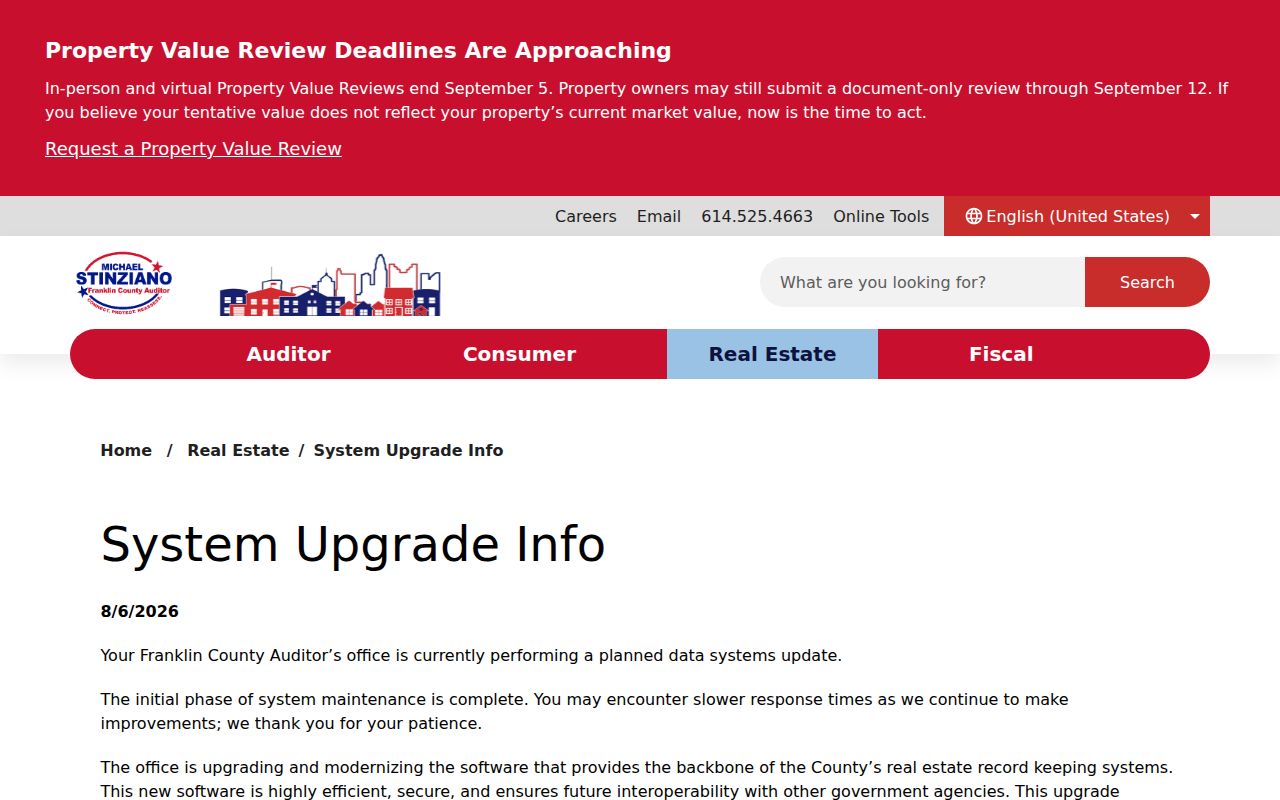 The practical fallback is Parcel Viewer, Treasurer search, the Auditor counter, or a Recorder legal-description search.